
What Will the Classroom of 2030 Look Like?

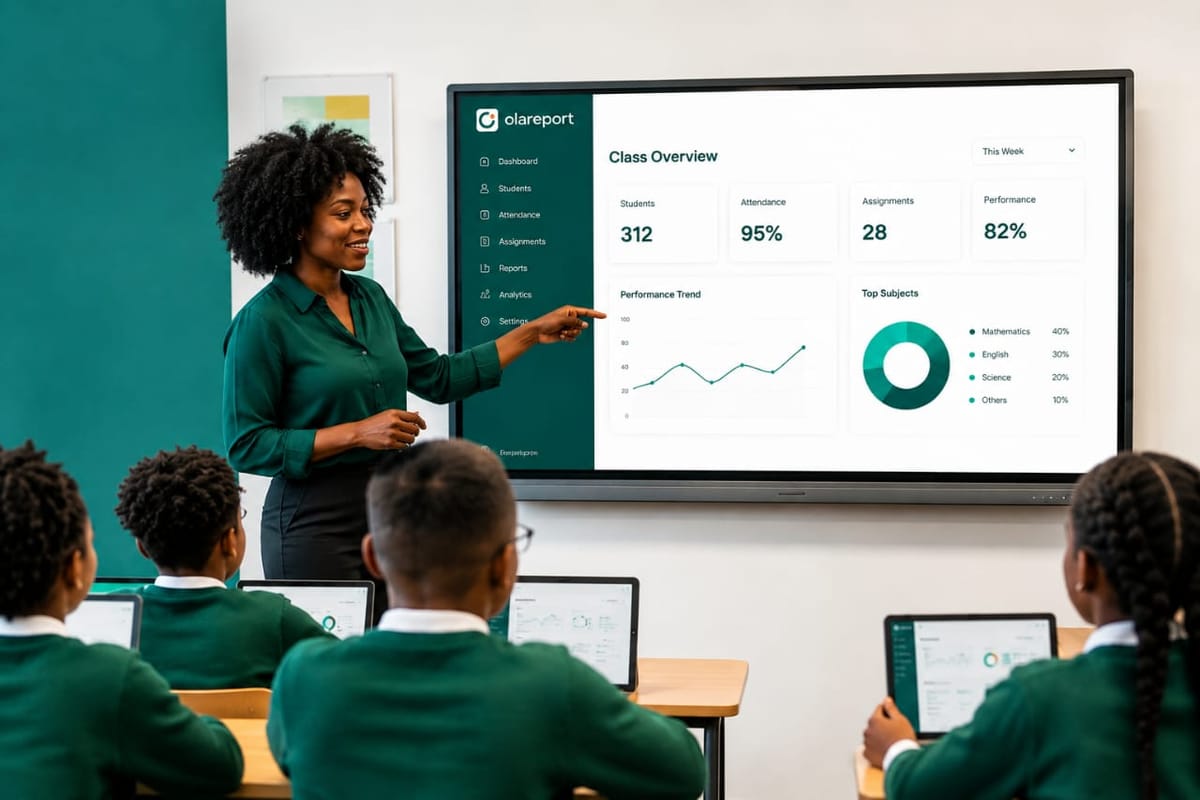
The classroom of 2030 may look very different from the classroom we know today.
For decades, education has relied on familiar tools and processes: textbooks, chalkboards, paper registers, manual assessments and traditional report cards. But technology is changing how schools operate, how teachers work and how students learn. The classroom of the future will not simply be more digital. It will be more connected, intelligent and responsive.
A More Connected Classroom
In the classroom of 2030, technology will connect the different parts of the school experience.
Teachers will be able to manage attendance, lesson plans, assessments, student records and communication from connected digital platforms. School leaders will have access to data that can help them understand performance and make better decisions.
Parents and schools will also have more seamless ways to communicate, creating a stronger connection between what happens in the classroom and what happens at home.
AI Will Become Part of the Teacher's Toolkit
Artificial intelligence is likely to become one of the most important technologies in education.
Rather than replacing teachers, AI can support them with repetitive and time-consuming tasks. From creating lesson plans and generating reports to analysing student performance, AI can give teachers more time to focus on what matters most: teaching and supporting their students.
The goal should not be to make education less human. It should be to use technology to give educators more capacity to be human.
Data Will Help Schools Make Better Decisions
The classroom of 2030 will also be powered by data.
Instead of relying only on intuition or information scattered across paper files and spreadsheets, schools will be able to use real-time insights to understand attendance, academic performance and other important trends.
This could help educators identify areas where students need additional support and help school leaders make more informed decisions.
Teachers Will Have Better Digital Tools
The teacher of 2030 will need more than a laptop or smartphone.
Education technology will increasingly be designed around the actual needs of educators. Digital tools could help teachers plan lessons, record attendance, track assessments, communicate with parents and access learning resources from one connected environment.
This means technology becomes less of an additional task and more of an assistant in the teaching process.
The Classroom Will Become More Interactive
As digital tools continue to develop, learning can become more interactive and personalised.
Teachers may use digital learning materials, interactive displays, AI-powered tools and other classroom technologies to create experiences that better engage different types of learners.
The future classroom will not be defined by technology alone. It will be defined by how effectively technology is used to improve learning.
The Future Is Already Being Built
The classroom of 2030 is not simply a distant idea. The foundations are being built today.
Schools that embrace digital transformation can begin creating more connected systems, empowering teachers with better tools and using data to improve decision-making.
At Olareport, we believe the future of education should bring software, AI, data and education technology together to create smarter and more efficient learning environments.
The question is no longer whether technology will change education.
The question is: how prepared is your school for what comes next?
Ready to build the future of education?
Discover how Olareport can help your school embrace a more connected and intelligent approach to education.


 Download App
